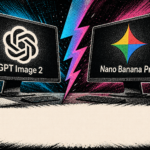
ChatGPT Image 2 vs Nano Banana Pro: Practical 2026 Verdict

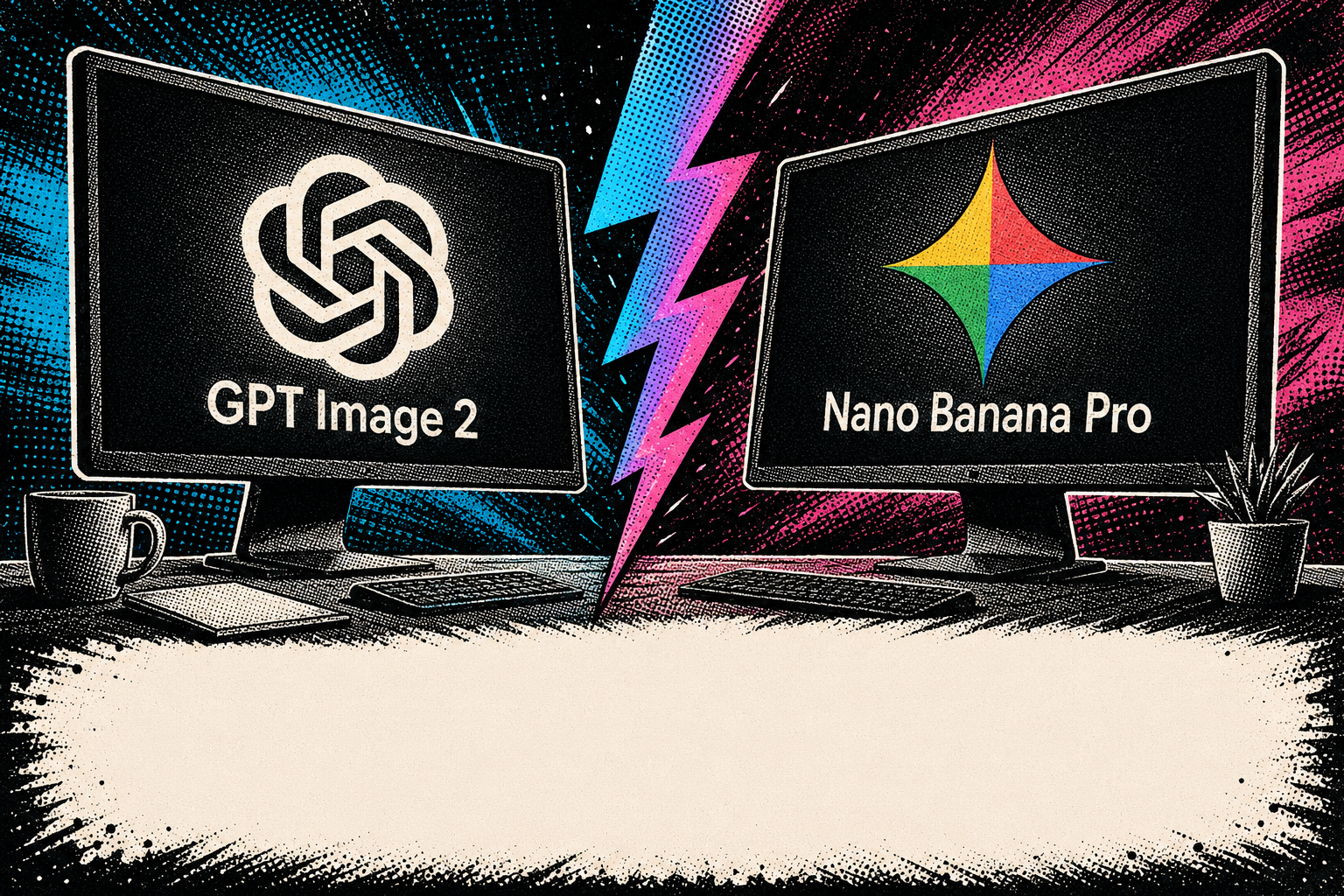
You brief a designer once. You brief an AI image generator every single time, because the first output is never quite right. That gap between what you typed and what came back is exactly where ChatGPT Image 2 vs Nano Banana Pro stops being a spec-sheet argument and becomes a real production decision.
Both models shipped major upgrades in 2026, and both claim the top spot on independent leaderboards for different reasons. Most comparisons online just repeat each company’s press release. This is the practical version of the ChatGPT Image 2 vs Nano Banana Pro matchup: text rendering, resolution, editing consistency, speed, and cost per image, with a decision framework instead of a scoreboard.
If you run marketing, product, or content for a software team and you’re the one who has to pick a tool and defend the choice next quarter, this ChatGPT Image 2 vs Nano Banana Pro breakdown is written for you.
ChatGPT Image 2 vs Nano Banana Pro at a Glance
Before the detail, here is the short version of the ChatGPT Image 2 vs Nano Banana Pro comparison for anyone who needs an answer in the next five minutes.
| Category | Winner | Why |
|---|---|---|
| Text and typography accuracy | GPT Image 2 | Near-100% character accuracy on dense and multilingual text |
| Resolution and aspect ratio range | Nano Banana Pro | Native 4K, 14 aspect ratios versus 2K and a continuous range |
| Generation speed | GPT Image 2 | Roughly 3 seconds versus 10 to 15 seconds per image |
| Multi-subject consistency | Nano Banana Pro | Up to 14 reference images, 5 consistent people per scene |
| Editing precision controls | Nano Banana Pro | Manual camera, lighting, and color grading controls |
| Ecosystem fit for Google Workspace teams | Nano Banana Pro | Native integration with Slides, Vids, Ads, and Vertex AI |
| Ecosystem fit for ChatGPT-based teams | GPT Image 2 | No extra tool needed if your workflow already lives in ChatGPT |
Neither column wins outright. That’s exactly why the rest of this ChatGPT Image 2 vs Nano Banana Pro comparison matters more than a single verdict.
What Actually Changed: ChatGPT Image 2 vs Nano Banana Pro
Both companies rebuilt their models around the same insight: casual editing was good enough for social posts, not production work. The result is two very different approaches.
GPT Image 2: OpenAI’s First Reasoning-Led Image Model
OpenAI released GPT Image 2, marketed to consumers as ChatGPT Images 2.0, on April 21, 2026. ChatGPT and Codex access opened the next day, with API access following in early May.
The headline change is architectural: GPT Image 2 is the first OpenAI image model that reasons before it renders. Instead of mapping a prompt straight to pixels, it researches your prompt’s constraints, plans the composition, checks proportions and color logic, then re-verifies the output.
In practice, that shows up as sharply improved dense text rendering and tighter instruction following on multi-element scenes. One prompt can return coordinated assets in several aspect ratios at once, which matters if you’re building a campaign rather than a single hero image. GPT Image 2 also has live web search built in, so it can check a real product name or current logo before it draws instead of guessing from a training cutoff.
Nano Banana Pro: Google’s Compositional Powerhouse
Nano Banana Pro is Google DeepMind’s flagship image model, built on Gemini 3 Pro. It sits at the top of a three-tier family that now includes the faster Nano Banana 2 and the lightweight Nano Banana 2 Lite for quick drafts.
When people say “the latest Nano Banana,” they usually mean Nano Banana Pro, since that’s still the highest-fidelity tier Google ships. The 2 and 2 Lite variants are newer releases, but they’re built for speed, not a higher quality ceiling. This distinction matters for the ChatGPT Image 2 vs Nano Banana Pro comparison specifically, since Pro is the tier most benchmarks actually test.
Nano Banana Pro’s strength is control at scale. It composites up to 14 reference images into one output while holding the likeness of up to five people consistent, natively supports 14 aspect ratios up to 4K, and pulls in Google Search grounding for accurate infographics, recipes, or live data instead of a plausible-looking guess. Every image also carries an invisible SynthID watermark, with a visible mark on free and Pro-tier outputs that Ultra subscribers and AI Studio users can remove.
ChatGPT Image 2 vs Nano Banana Pro: Text Rendering and Accuracy
Text inside an image used to be the tell that gave AI-generated visuals away. That gap has mostly closed, but not evenly, and it’s one of the clearest splits in the ChatGPT Image 2 vs Nano Banana Pro matchup.
Independent reporting on the model’s launch and testing on LM Arena’s evaluation set both found GPT Image 2 rendering short and dense text with close to 100% character accuracy, including UI labels, signage, and multilingual scripts like Japanese, Korean, Hindi, Bengali, and Arabic in a single pass. Nano Banana Pro scored strong but measurably lower on the same tests, closer to 94%, with occasional character bleeding on longer strings.
The practical read on ChatGPT Image 2 vs Nano Banana Pro text accuracy: if your output leans on legible copy, a UI mockup, or an ad with a headline baked into the image, GPT Image 2 is the safer default. If your text needs are short, like a single tagline, both models are close enough that the gap won’t decide your workflow.
Test this yourself before trusting any single benchmark. Ask both models for a product label, a UI screen with three menu items, and a street sign in a non-English language. Your specific fonts and layouts are the only test that actually predicts your results.
Resolution, Aspect Ratios, and Output Quality
This is where the ChatGPT Image 2 vs Nano Banana Pro comparison genuinely splits, because the two models are optimized for different delivery targets.
| Spec | GPT Image 2 | Nano Banana Pro |
|---|---|---|
| Native resolution | 2048px (2K), general availability | Up to 4K across four resolution tiers |
| Aspect ratio range | Continuous, roughly 3:1 to 1:3 | 14 fixed ratios including 16:9, 9:16, 21:9 |
| Best fit | Square and portrait assets, in-app visuals | Widescreen slides, print, large displays |
| Multi-format from one prompt | Yes, several ratios in one generation | One ratio per generation, high control per shot |
If your asset is heading to a keynote background, a pitch deck, or anything wider than a laptop screen, Nano Banana Pro’s native 4K and 16:9 support gives you a cleaner path than upscaling a 2K image after the fact.
If your work lives mostly at 1:1, 3:2, or 2:3, inside chat-based workflows, GPT Image 2’s range covers it without needing a fixed-ratio picker. On resolution alone, the ChatGPT Image 2 vs Nano Banana Pro gap favors Nano Banana Pro for anything destined for a large screen or print.
Speed and Editing Workflow
Nobody talks about generation speed until it’s the thing slowing down a sprint, and it’s an underrated part of the ChatGPT Image 2 vs Nano Banana Pro decision. GPT Image 2 typically returns a result in around 3 seconds, largely because its reasoning step is optimized for iteration, not heavy compute per frame. Nano Banana Pro generally takes 10 to 15 seconds, a real difference when you’re running 20 variations to find one usable direction.
Editing consistency tells a different story. On LM Arena’s image-editing leaderboard, GPT Image 2 posted the top score in its category, largely on the strength of layout-heavy edits and preserved lighting across iterative changes.
Nano Banana Pro’s editing tools are more mature in a different sense: they offer granular controls for camera angle, focus, color grading, and lighting shifts, like turning day into night, that go beyond a text prompt alone. On the speed axis of ChatGPT Image 2 vs Nano Banana Pro, GPT Image 2 wins the exchange for fast, clean edits. For fine manual control over a shot after generation, Nano Banana Pro gives you more dials to turn.
Multi-Image Consistency and Creative Control
This is Nano Banana Pro’s clearest advantage in the ChatGPT Image 2 vs Nano Banana Pro comparison. It can pull in up to 14 reference images and hold the identity of up to 5 people consistent across a single composition, the difference between “generate a person” and “put these five specific people, correctly, into one believable scene.”
That matters for product catalogs built from one source photo, fashion editorial work, or any campaign that needs the same character or product to reappear across multiple images without drifting.
On this dimension of ChatGPT Image 2 vs Nano Banana Pro, GPT Image 2 handles reference-based editing well and preserves branded logos across edits reliably, but it isn’t built around the same scale of multi-subject compositing. For a single edited photo or a branded asset variant, it’s more than capable. For assembling a scene out of a dozen separate inputs, Nano Banana Pro is the more purpose-built tool.
Pricing Breakdown: What Each Image Actually Costs
Both models are billed on usage, not a flat per-image rate, so the real cost in the ChatGPT Image 2 vs Nano Banana Pro decision depends on resolution and prompt complexity. These are approximate figures based on published token and per-image rates, and they will shift as both companies adjust pricing.
| Access | GPT Image 2 | Nano Banana Pro |
|---|---|---|
| Consumer app | Included in ChatGPT Free, Plus ($20/mo), Pro ($100/mo) | Included in Gemini app; AI Plus ($19.99/mo), Ultra ($124.99/mo) for higher quotas |
| API cost per image | Roughly $0.04 to $0.35, depending on complexity and resolution | Roughly $0.13 at 1K to 2K, up to $0.24 at 4K |
| Billing model | Token-based (image and text tokens) | Per-image, tiered by resolution |
Neither model is meaningfully cheaper across the board. GPT Image 2’s token pricing rewards simple, low-token prompts and punishes complex multi-element scenes, since a dense infographic with several text blocks can run $0.30 or more, while a plain single-subject shot stays closer to $0.04.
Nano Banana Pro’s flat per-resolution pricing is easier to forecast for teams generating a consistent batch size, since a 2K image costs roughly the same whether it’s a plain product shot or a complex composite. If your team is still working out what a sustainable AI tool budget looks like, it’s worth reading our breakdown of free AI tools that are actually worth using in 2026 before committing to a paid tier on either side.
Where Each Model Actually Wins
Strip away the marketing and the ChatGPT Image 2 vs Nano Banana Pro decision comes down to what you’re shipping.
- Choose GPT Image 2 if you need fast iteration, dense or small legible text, UI mockups, infographic labels, multilingual copy, or your workflow already lives inside ChatGPT.
- Choose Nano Banana Pro if you need native 4K output, wide or unusual aspect ratios, consistent multi-person or multi-product compositing, or you’re operating inside Google Workspace, Ads, or Vertex AI already.
- Use both if your team produces enough volume to justify it: GPT Image 2 for fast concepting and text-heavy assets, Nano Banana Pro for final hero images that need to hold up at large scale.
Neither side of ChatGPT Image 2 vs Nano Banana Pro is a universal upgrade over the other. They were built to solve different production problems, and picking based on brand loyalty instead of the actual asset you need is how teams end up paying for a subscription nobody uses correctly.
Where GPT Image 2 and Nano Banana Pro Fit Among Other AI Image Generators
Neither model exists in a vacuum. Midjourney still leads on raw artistic style for teams that care more about mood than commercial precision, and a wave of smaller API-first models compete purely on price for high-volume batch work.
What separates the ChatGPT Image 2 vs Nano Banana Pro pair from that wider field is that both are built for production reliability first: consistent branding, legible text, and repeatable output, rather than one striking hero image out of fifty attempts. If your team’s real need is stylistic exploration rather than shippable assets, test a style-first model alongside whichever of these two you pick.
Common Mistakes Teams Make Choosing an AI Image Generator
Most teams don’t fail at the ChatGPT Image 2 vs Nano Banana Pro decision because the tools are bad. They fail because they skip the evaluation step and buy based on a demo.
- Testing on stock prompts instead of real briefs. A demo prompt about “a cat in a spacesuit” tells you nothing about how a model handles your actual product shots or brand guidelines.
- Ignoring resolution requirements until after the asset is due. If your final placement is a 4K display or print run, testing only at 1K resolution hides problems that show up later.
- Skipping the watermark and provenance question. SynthID on Nano Banana Pro outputs matters for teams in regulated or brand-sensitive industries.
- Not budgeting for iteration. Nobody gets a usable image on the first try consistently, in ChatGPT Image 2 vs Nano Banana Pro or any other model. Price out 10 to 20 generations per final asset, not one.
These are the same evaluation gaps that show up across every AI tool category, not just image generation. If you want a repeatable framework for testing any AI tool before committing budget to it, our guide on how to evaluate AI tools without falling for marketing hype walks through the same discipline applied more broadly.
How to Test ChatGPT Image 2 vs Nano Banana Pro Before You Commit Budget
Benchmarks tell you how a model performs on someone else’s prompts. The only test that matters is how it performs on yours. Before picking a side in the ChatGPT Image 2 vs Nano Banana Pro decision, run this short evaluation with your own team:
- Pull three real briefs from the last month, not hypothetical use cases, actual requests from a PM, a marketer, or a support lead this quarter.
- Run each brief through both models at final resolution. Testing at a low preview resolution hides quality problems that only appear at publish size.
- Score on usability, not preference. Ask whether the output could ship today with zero edits, one small edit, or a full redo.
- Time the full loop, not just generation, including the time spent re-prompting until you got something usable.
- Check the cost at your real volume. A price that looks cheap at 10 images a month can look very different at 500.
This is a 90-minute exercise for most teams, and it will tell you more about ChatGPT Image 2 vs Nano Banana Pro than any leaderboard score cited earlier in this article.
Frequently Asked Questions
Is GPT Image 2 the same as ChatGPT Images 2.0?
Yes. GPT Image 2 is the API name for the model that ChatGPT markets to consumers as ChatGPT Images 2.0. Both refer to the same underlying model released by OpenAI on April 21, 2026.
What is the actual latest version of Nano Banana?
Nano Banana Pro (Gemini 3 Pro Image) is Google’s highest-fidelity image model and the one most ChatGPT Image 2 vs Nano Banana Pro benchmarks actually test. Nano Banana 2 and Nano Banana 2 Lite are newer, faster, and cheaper releases built for speed and draft work, not higher output quality.
Which model is better for a small team with no design budget?
GPT Image 2 tends to be the more forgiving starting point in the ChatGPT Image 2 vs Nano Banana Pro comparison because it’s already included in ChatGPT Plus and handles the small, text-heavy assets small teams need most.
Can I use either side of ChatGPT Image 2 vs Nano Banana Pro for commercial work?
Both OpenAI and Google permit commercial use under their respective terms of service, but check current usage policies before publishing client work, since both companies update these terms periodically.
Do I need to credit or disclose AI-generated images?
Nano Banana Pro embeds an invisible SynthID watermark on every output regardless of disclosure choices. GPT Image 2 does not currently ship an equivalent built-in watermark, so confirm what your platform or regulator expects before publishing either model’s output at scale.
The Verdict: ChatGPT Image 2 vs Nano Banana Pro in 2026
GPT Image 2 wins on speed, text accuracy, and workflow simplicity if your team already lives in ChatGPT. Nano Banana Pro wins on resolution ceiling, aspect ratio flexibility, and multi-subject consistency if your output needs to survive being blown up on a large screen or hold five people’s likeness correctly in one frame.
The honest answer to ChatGPT Image 2 vs Nano Banana Pro isn’t that one replaces the other. Most teams doing real production work will eventually need both, used for the jobs each one was actually built for.
Start by identifying the one asset type your team generates most often. Run the same brief through both models this week, and let that result, not the spec sheet, decide where your budget goes next.